

A satellite is an object in space that orbits or circles around a bigger object. There are two kinds of satellites: natural (such as the moon orbiting the Earth) or artificial (such as the International Space Station orbiting the Earth).
There are dozens upon dozens of natural satellites in the solar system, with almost every planet having at least one moon. Saturn, for example, has at least 53 natural satellites, and between 2004 and 2017, it also had an artificial one — the Cassini spacecraft, which explored the ringed planet and its moons.
Artificial satellites, however, did not become a reality until the mid-20th century. The first artificial satellite was Sputnik, a Russian beach-ball-size space probe that lifted off on Oct. 4, 1957. That act shocked much of the Western world, as it was believed the Soviets did not have the capability to send satellites into space.
How do satellites orbit Earth?
Most satellites are launched into space on rockets. A satellite orbits Earth when its speed is balanced by the pull of Earth’s gravity. Without this balance, the satellite would fly in a straight line off into space or fall back to Earth.
Satellites orbit Earth at different heights, different speeds and along different paths. The two most common types of orbit are “geostationary” (jee-oh-STAY-shun-air-ee) and “polar.”
A geostationary satellite travels from west to east over the equator. It moves in the same direction and at the same rate Earth is spinning. From Earth, a geostationary satellite looks like it is standing still since it is always above the same location.
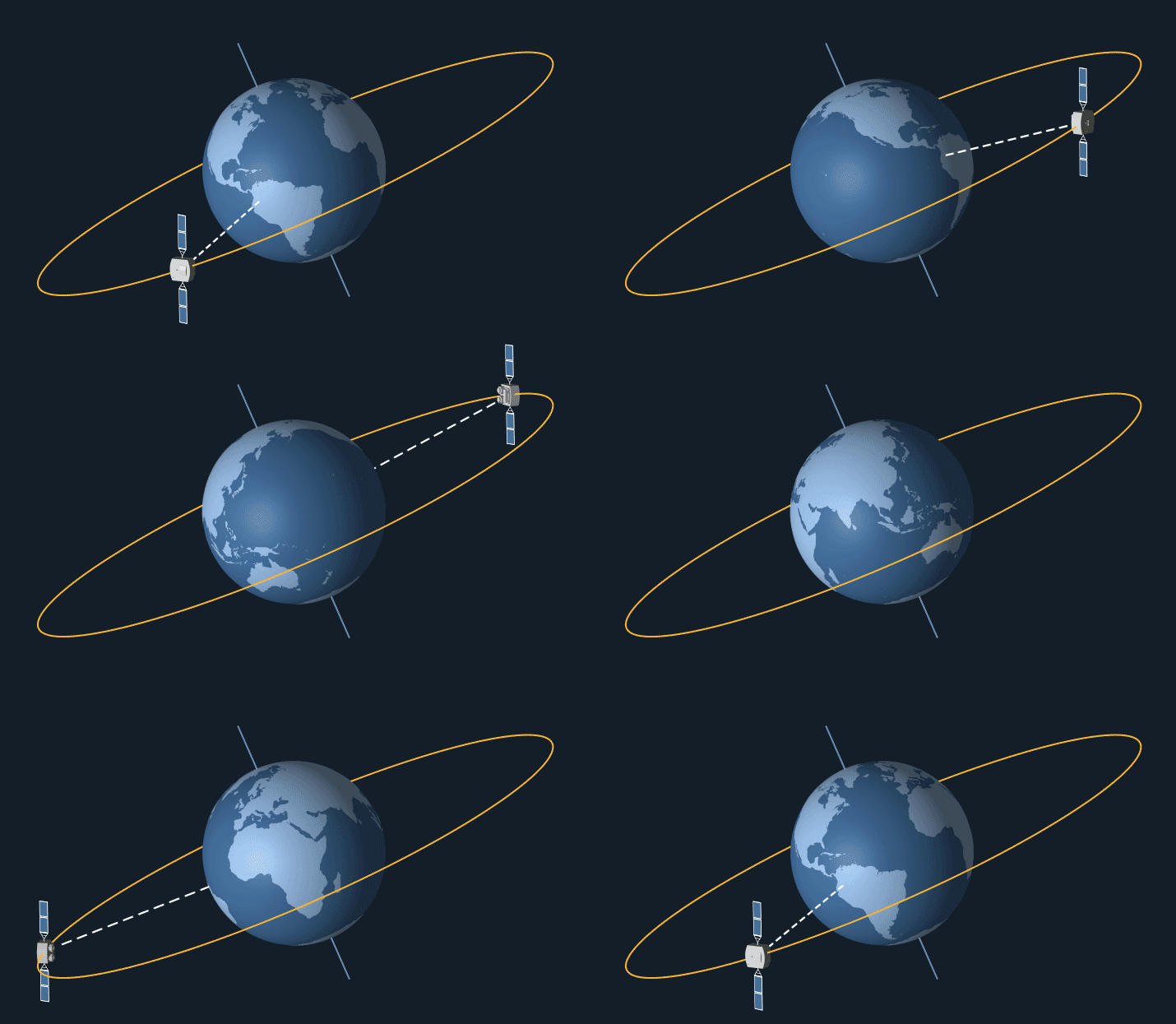
Polar-orbiting satellites travel in a north-south direction from pole to pole. As Earth spins underneath, these satellites can scan the entire globe, one strip at a time.
What are the parts of an artificial satellite?
Man-made satellites come in many shapes and sizes. But most have at least two parts in common – an antenna and a power source. The antenna sends and receives information, usually to and from Earth. Just like a toy that requires batteries to work here on Earth, satellites need power, too! There are several types of power sources for satellites, such as solar panels or batteries. Solar panels are cool because they power the satellite by turning sunlight into electricity.
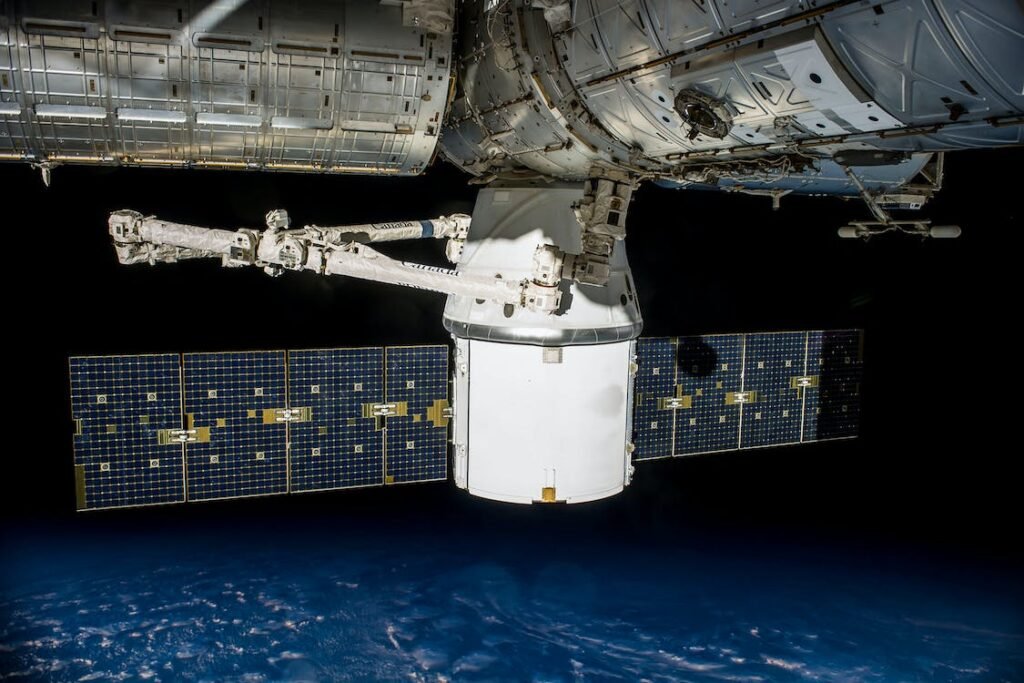
Many NASA satellites carry cameras and scientific sensors. Sometimes, these instruments point toward Earth to gather information about its land, air and water. Other times, they face toward space to collect data from the solar system and universe.
BRIEF HISTORY OF ARTIFICIAL SATELLITES
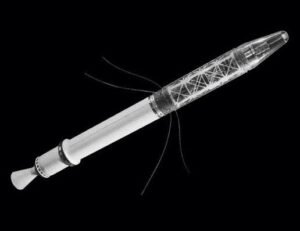
Following that feat, on Nov. 3, 1957 the Soviets launched an even more massive satellite — Sputnik 2 — which carried a dog, Laika. The United States’ first satellite was Explorer 1 on Jan. 31, 1958. The satellite was only 2 percent the mass of Sputnik 2, however, at 30 pounds (13 kg).
The Sputniks and Explorer 1 became the opening shots in a space race between the United States and the Soviet Union that lasted until at least the late 1960s. The focus on satellites as political tools began to give way to people as both countries sent humans into space in 1961. Later in the decade, however, the aims of both countries began to split. While the United States went on to land people on the moon and create the space shuttle, the Soviet Union constructed the world’s first space station, Salyut 1, which launched in 1971. (Other stations followed, such as the United States’ Skylab and the Soviet Union’s Mir.)
- Other countries began sending satellites into space as the benefits rippled through society. Weather satellites improved forecasts, even for remote areas. Land-watching satellites such as the Landsat series (on its ninth generation now) tracked changes in forests, water and other parts of Earth’s surface over time. Telecommunications satellites made long-distance telephone calls and eventually, live television broadcasts from across the world a normal part of life. Later generations helped with Internet connections.
- With the miniaturization of computers and other hardware, it’s now possible to send up much smaller satellites that can do science, telecommunications, or other functions in orbit. It’s common now for companies and universities to create “CubeSats“, or cube-shaped satellites that frequently populate low-Earth orbit.