

ISRO’s journey began on August 15, 1969, when it was officially founded by Dr. Vikram Sarabhai, often regarded as the father of India’s space program.Its headquarters are in Bengaluru (formerly Bangalore). Dr. Sarabhai’s vision was to harness space technology for the betterment of India’s society and economy. At its inception, ISRO operated with a small team and limited resources. Still, it was fueled by a sense of purpose and determination.
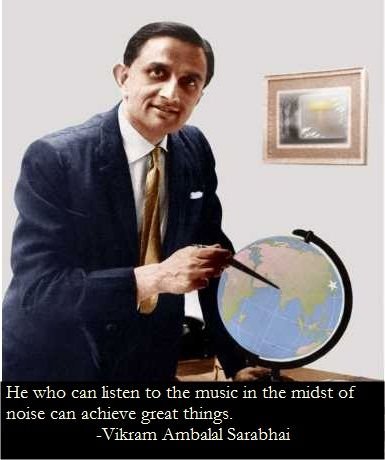
It all started with the setting up the Thumba Equatorial Rocket Launching Station (TERLS) in 1963, which marked the beginning of the Indian Space Programme. The Space Commission and the Department of Space (DOS) were established by the Government of India in 1972 to promote unified development and application of space science and technology for identified national objectives.
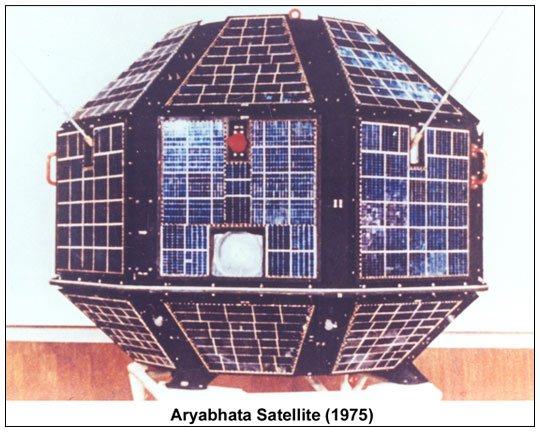
Several important milestones marked ISRO’s early years. In 1975, India launched its first satellite, Aryabhata, into orbit. This achievement signalled India’s entry into the space race and set the stage for more ambitious missions to come. Over the next decade, ISRO continued to develop its capabilities, launching satellites for communication, remote sensing, and meteorology.It all started with the setting up the Thumba Equatorial Rocket Launching Station (TERLS) in 1963, which marked the beginning of the Indian Space Programme. The Space Commission and the Department of Space (DOS) were established by the Government of India in 1972 to promote unified development and application of space science and technology for identified national objectives.
ISRO built India’s first satellite, Aryabhata, which was launched by the Soviet space agency Interkosmos in 1975.[12] In 1980, ISRO launched satellite RS-1 onboard SLV-3, making India the seventh country to be capable of undertaking orbital launches. SLV-3 was followed by ASLV, which was subsequently succeeded by the development of many medium-lift launch vehicles, rocket engines, satellite systems and networks enabling the agency to launch hundreds of domestic and foreign satellites and various deep space missions for space exploration. This achievement signalled India’s entry into the space race and set the stage for more ambitious missions to come. Over the next decade, ISRO continued to develop its capabilities, launching satellites for communication, remote sensing, and meteorology.
Modern space research in India can be traced to the 1920s, when scientist S. K. Mitra conducted a series of experiments sounding the ionosphere through ground-based radio in Kolkata. Later, Indian scientists like C.V. Raman and Meghnad Saha contributed to scientific principles applicable in space sciences. After 1945, important developments were made in coordinated space research in India by two scientists: Vikram Sarabhai, founder of the Physical Research Laboratory at Ahmedabad, and Homi Bhabha, who established the Tata Institute of Fundamental Research in 1945.Initial experiments in space sciences included the study of cosmic radiation, high-altitude and airborne testing, deep underground experimentation at the Kolar mines—one of the deepest mining sites in the world—and studies of the upper atmosphere. These studies were done at research laboratories, universities, and independent locations.
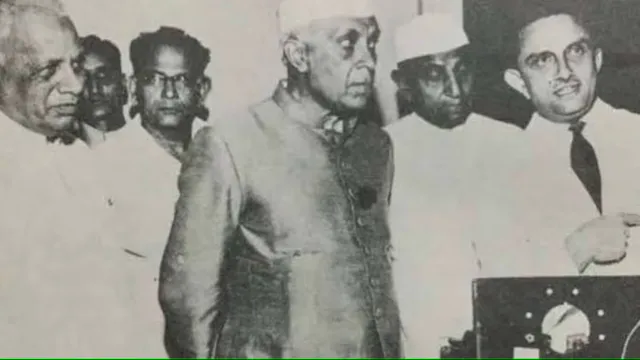
The Indian National Committee for Space Research (INCOSPAR) was set up in 1962 by Prime Minister Jawaharlal Nehru on the suggestion of Dr. Vikram Sarabhai. Initially there was no dedicated ministry for the space programme and all activities of INCOSPAR relating to space technology continued to function within the DAE. IOFS officers were drawn from the Indian Ordnance Factories to harness their knowledge of propellants and advanced light materials used to build rockets. H.G.S. Murthy, an IOFS officer, was appointed the first director of the Thumba Equatorial Rocket Launching Station, where sounding rockets were fired, marking the start of upper atmospheric research in India. An indigenous series of sounding rockets named Rohini was subsequently developed and started undergoing launches from 1967 onwards. Waman Dattatreya Patwardhan, another IOFS officer, developed the propellant for the rockets.
The Indian Space Research Organisation (ISRO) operates through a countrywide network of centres. Sensors and payloads are developed at the Space Applications Centre in Ahmedabad. Satellites are designed, developed, assembled, and tested at the U R Rao Satellite Centre (formerly the ISRO Satellite Centre) in Bengaluru. Launch vehicles are developed at the Vikram Sarabhai Space Centre in Thiruvananthapuram. Launches take place at the Satish Dhawan Space Centre on Sriharikota Island, near Chennai. The Master Control Facilities for geostationary satellite station keeping are located at Hassan and Bhopal. Reception and processing facilities for remote-sensing data are at the National Remote Sensing Centre in Hyderabad. ISRO’s commercial arm is Antrix Corporation, which has its headquarters in Bengaluru.