

Introduction
The Indian Remote Sensing (IRS) series stands as a testament to India’s prowess in space technology, particularly in the realm of Earth observation satellites. Spearheaded by the Indian Space Research Organisation (ISRO), this series has been instrumental in providing crucial data for various applications, ranging from agriculture and forestry to disaster management and national security. In this comprehensive exploration, we will delve into the IRS series, focusing on the pioneering satellites IRS-1A and IRS-1B, and the technologically advanced IRS-P3.
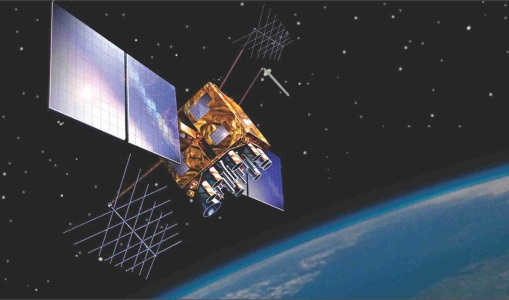
Overview of IRS Series
The IRS series, also known as the Indian Remote Sensing satellite series, stands as a crowning achievement in India’s expansive space exploration efforts. Since its inception, this constellation of satellites has played a pivotal role in fostering the country’s progress in a multitude of sectors. By leveraging advanced sensors and cutting-edge imaging technology, the IRS satellites have revolutionized the acquisition of high-resolution, multi-spectral imagery of the Earth’s surface. This has not only facilitated unparalleled advancements in resource management and environmental monitoring but has also proven instrumental in bolstering national development initiatives across India. Embodying a dual-purpose nature, these satellites have seamlessly catered to both civilian and military requirements, solidifying their significance as transformative assets in the realm of space technology and application.
IRS-1A: Pioneer in Earth Observation
Launched on March 17, 1988, the Indian Remote Sensing Satellite-1A (IRS-1A) holds a significant place in India’s space exploration history. Its successful launch marked the dawn of India’s indigenous Earth observation satellite program, a remarkable achievement that propelled the country into the space age with cutting-edge technology. The advanced capabilities of IRS-1A played a pivotal role in various critical functions, including mapping natural resources, facilitating land-use planning, and monitoring the environment.
The successful mission of IRS-1A not only demonstrated India’s prowess in space technology but also set the stage for subsequent advancements in the Indian Remote Sensing (IRS) series. This historic satellite paved the way for continued progress and innovation in satellite technology, enabling India to make significant contributions to Earth observation and environmental monitoring on a global scale. The legacy of IRS-1A lives on in the ongoing advancements and accomplishments in India’s space exploration endeavors, serving as a testament to the country’s commitment to technological excellence and scientific advancement.
Key Features of IRS-1A:
- Sensors: IRS-1A was equipped with the Linear Imaging Self-Scanning Sensor (LISS-I), capable of capturing imagery in four spectral bands. This allowed for detailed observations and analysis.
- Applications: The applications of IRS-1A spanned diverse sectors, including agriculture, forestry, and cartography. The satellite contributed vital data for India’s developmental initiatives.
- Legacy: IRS-1A’s success not only demonstrated India’s capability in space technology but also laid the foundation for the continued evolution of Earth observation satellites.
IRS-1B: Continuation of Success
The Indian Space Research Organisation (ISRO) achieved another significant milestone with the successful launch of IRS-1B on August 29, 1991. Building on the success of IRS-1A, this satellite was equipped with enhanced sensors and extended operational life, further elevating India’s capabilities in the field of Earth observation. The advanced features of IRS-1B not only strengthened India’s position in the global space community but also demonstrated the country’s commitment to pushing the boundaries of space exploration and technology. Through this remarkable achievement, ISRO solidified its reputation as a key player in the international space arena, showcasing its ability to continuously innovate and contribute to scientific advancements on a global scale.
Enhancements in IRS-1B:
- Upgraded Sensors: IRS-1B featured advanced sensors, including the upgraded Linear Imaging Self-Scanning Sensor (LISS-II), offering better spectral resolution and increased swath coverage. This enhancement resulted in more precise and detailed observations.
- Applications: The enhanced capabilities of IRS-1B contributed to improved land-use planning, agricultural monitoring, and disaster management. The satellite’s impact was felt across various sectors due to its versatility.
- Operational Life: IRS-1B operated successfully for an extended period, providing a consistent stream of valuable data. This prolonged operational life ensured data continuity and long-term observations.
Comparison between IRS-1A and IRS-1B:
| Aspect | IRS-1A | IRS-1B |
|---|---|---|
| Launch Date | March 17, 1988 | August 29, 1991 |
| Spatial Resolution | 5.8 meters | Improved capabilities |
| Sensors | LISS-I | Upgraded sensors (LISS-II) |
| Applications | Initial Earth observation | Enhanced capabilities |
| Contribution to Succession | Pioneering satellite | Continued success |
IRS-P3: Advancing Technological Frontiers
The Indian Remote Sensing satellite, IRS-P3, which was launched on March 21, 1996, marked a significant milestone in the technological advancements of the IRS series. This satellite was equipped with state-of-the-art sensors and imaging technology, enabling a broad spectrum of precise and diverse applications. The incorporation of advanced technological capabilities in IRS-P3 expanded the scope of remote sensing and paved the way for a new era of satellite-based observations.
Technological Advancements in IRS-P3:
- Sensors and Payloads: IRS-P3 featured a diverse payload, including sensors like the Wide Field Sensor (WiFS) and the Disaster Monitoring Constellation (DMC), expanding the range of applications and data collection capabilities.
- Resolution and Swath Coverage: The satellite offered improved spatial resolution and swath coverage, enabling detailed observations and rapid data acquisition. This enhancement was crucial for capturing high-quality imagery across large areas.
- Applications in Disaster Management: IRS-P3 played a crucial role in disaster management, providing rapid and accurate imagery during natural calamities. Its ability to capture data quickly contributed to timely response efforts.
List of Points on IRS-P3:
- IRS-P3 contributed significantly to the understanding of climate change by monitoring environmental changes over time. Its data became invaluable for assessing the impact of climate variability on various ecosystems.
- The satellite’s advanced sensors enabled precise cartographic mapping, aiding in urban planning and infrastructure development. IRS-P3’s data played a critical role in shaping sustainable urban growth strategies.
- IRS-P3 was part of international collaborations, contributing Earth observation data to global initiatives. This cooperation facilitated a broader understanding of global environmental changes and their interconnected nature.